Artificial Intelligence in Fleet Management use cases
Does AI help you cut operating costs?
Fleet Technology
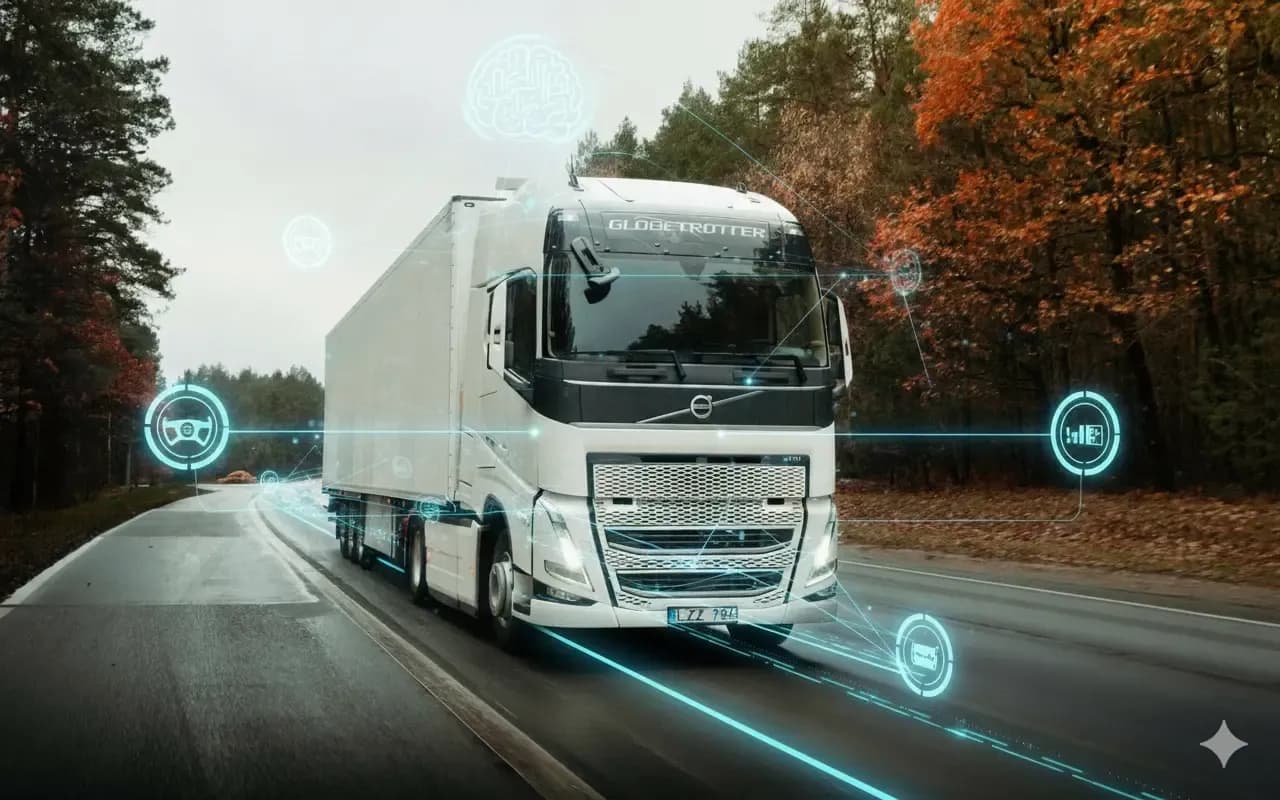
Saudi Arabia’s artificial intelligence in fleet management market exceeds $1.2 billion, and telematics adoption is accelerating with key growth in logistics sector at 5.5% CAGR according to a report by Ken Research Private Limited; the shift is happening fast. It is reshaping how you run your vehicles every day so you can make decisions based on accurate, up-to-date reports. Read this blog to discover where AI shows up in your fleet, how it works, and how you can use it to cut costs, improve safety, and scale smarter.
Where Do You Find Artificial Intelligence in Fleet Management?
1. Vehicle Tracking and Monitoring
AI enhances GPS tracking systems by turning raw location data into insights. Instead of just seeing where your vehicle is, you understand why it’s delayed, whether the route is efficient, and how the driver’s truck behavior affects performance. This point is where AI in telematics, as in the Fleetoo system for managing fleets, becomes pivotal. Such a modern system uses real-time data from your vehicles, and AI interprets it instantly.
2. Maintenance Alerts
Traditional maintenance is reactive, and AI flips that completely. With predictive analytics, your system tells you which vehicle is likely to fail, what component needs attention, and when to schedule maintenance without any surprises or emergency breakdowns.
3. Route Optimization
Definitely, AI continuously improves routes by considering traffic conditions, weather changes, and delivery priorities. Companies like Fleetoo have proven this works, saving thousands of miles annually using AI-powered routing systems.
4. Emerging Tools
Agentic AI copilots assist you with shift planning, compliance tracking, and workflow automation using natural language processing. Advanced fleet management solutions in Saudi Arabia, like Fleetoo, integrate all demanding features in fleet management to facilitate your vehicle or truck operations.
5. Fuel Management
Fuel waste is one of your highest hidden costs. AI in fleet management identifies inefficiencies like excessive idling, poor driving habits, and engine performance issues. Even small improvements scale massively across your fleet.
AI vs Traditional Fleet Management Systems
According to McKinsey research, predictive maintenance using AI can reduce equipment downtime by up to 50% while extending machine life by 20-40%.
Here is the clear difference of using artificial intelligence in fleet management
Capability | Traditional Systems | AI-Powered Systems |
| Maintenance approach | Fixed schedules | Condition-based predictions |
| Route planning | Static, manual | Dynamic, optimized continuously |
| Problem detection | After failure occurs | Before failure occurs |
| Data utilization | Historical reporting | Real-time predictive analysis |
| Decision speed | Hours to days | Seconds to minutes |
| Improvement over time | Requires manual process changes | Automatic learning and adaptation |
Modern Fleet Management Systems Technologies
To understand the full power of artificial intelligence in fleet management, let’s dig deep into the technologies used in such systems:
1/ AI + IoT Integration
AI becomes powerful when it works with IoT devices. Your vehicles are equipped with sensors collecting data, such as engine temperature, fuel usage, and tire pressure. According to recent predictive maintenance research, this real-time data allows AI to detect patterns and predict failures before they happen. This means you’re preventing problems and creating a fully connected, intelligent fleet.
As a research form Stanford University simply put:
"The integration of AI with GPS tracking, (IoT) sensors and cloud-based fleet management platforms has revolutionized logistics operations by enhancing vehicle utilization, minimizing fuel consumption, and improving last-mile delivery efficiency."
2/Telematics Systems
AI in telematics is the backbone of modern fleet visibility. Saudi Arabia has already mandated telematics for commercial fleets to improve safety and efficiency. These systems track everything from location to the driver's last destination. AI then processes this data into actionable insights. Telematics transforms raw data into real operational control.
3/ ERP and API Integrations
When connecting a vehicle fleet management system with ERP and APIs, all vehicle data flow automatically to the accounting, dispatch, and maintenance team. so you don't have to do manual data entry and streamline operations.
4/ Generative AI Tools
In today’s digital world, generative AI fleet management represents the next evolution. Unlike traditional AI, generative AI can generate reports automatically, suggest operational strategies, and predict demand patterns.
AI in fleet management Example: Volvo
Let’s take a case study from the real world.
Volvo Trucks in the USA provides a compelling example of how artificial intelligence in fleet management helps prevent more than $1,000 per day in vehicle downtime losses.
Instead of servicing every vehicle at preset mileage points, AI analyzes fuel consumption patterns, idle time, oil sample data, and operating conditions to determine optimal service timing for each specific truck.
The practical benefits show up quickly. When operating conditions are good and trucks are running efficiently, the system delays unnecessary oil changes and inspections, while combining multiple maintenance tasks into a single work order.
So how to gain the same benefits and more as a fleet manager in Saudi Arabia?
Here where Fleetoo comes in
No more manual analysis with AI help of fleetoo
As Co founder & director of Cluxes Habib Shaikh mentioned:
" The fleet management industry in Saudi Arabia is undergoing a digital revolution that is redefining how logistics, transport, and mobility businesses operate "
To align with the 2030 vision, Fleetoo is transforming fleet management in Saudi Arabia by implementing AI in different vehicle management aspects, one of them is maintenance.
Fleetoo's AI analyzes telematics data from each vehicle keeping an eye on critical metrics such as engine temperature, brake performance and tire pressure.
It sets up baseline operating criteria which are fault rules to easily detect any future anomalies. Whenever a rule is triggered, the system informs you with a red flag and predicts specific maintenance needs before failures occur.
You will be notified immediately so maintenance can be scheduled during planned, low-impact periods rather than reacting to breakdowns.
Do you want to try fleetoo and customize it for your needs?

FAQ
What is the role of AI in fleet management?
The role of AI in fleet management is to analyze large volumes of data and turn it into actionable insights to helps you optimize routes, predict maintenance, improve safety, and reduce costs.
What are examples of artificial intelligence in fleet management?
Artificial intelligence in fleet management examples include predictive maintenance systems, AI-powered route optimization, driver behavior monitoring, and fuel efficiency analytics.
How accurate are AI maintenance predictions in practice?
AI maintenance systems achieve 85-95% accuracy in predicting component failures, depending on the system and vehicle type.
What is AI in telematics?
AI in telematics refers to using artificial intelligence to analyze data collected from vehicle tracking systems, turning it into insights for better decision-making.
Ahmed Adlan
CEO of Fleetoo
Chief Executive Officer of Fleetoo, a technology leader with deep expertise spanning software engineering and logistics. Previously served as Chief Technology Officer at ACTS, where he led a team of developers and successfully built an AI-powered chatbot leveraging vector databases. He delivered a distinctive application interface design capable of handling over 15,000 requests per second. Drawing on strong capabilities in system architecture, artificial intelligence, and cloud engineering, he leads Fleetoo with a clear vision: transforming fleet management into a strategic, data-driven asset powered by IoT and automation, with a strong focus on measurable impact and continuous innovation.