What Is a Fleet Tracking System? All you need to know
A complete guide to fleet tracking systems in Saudi Arabia, how they work, who needs them
Fleet Tracking
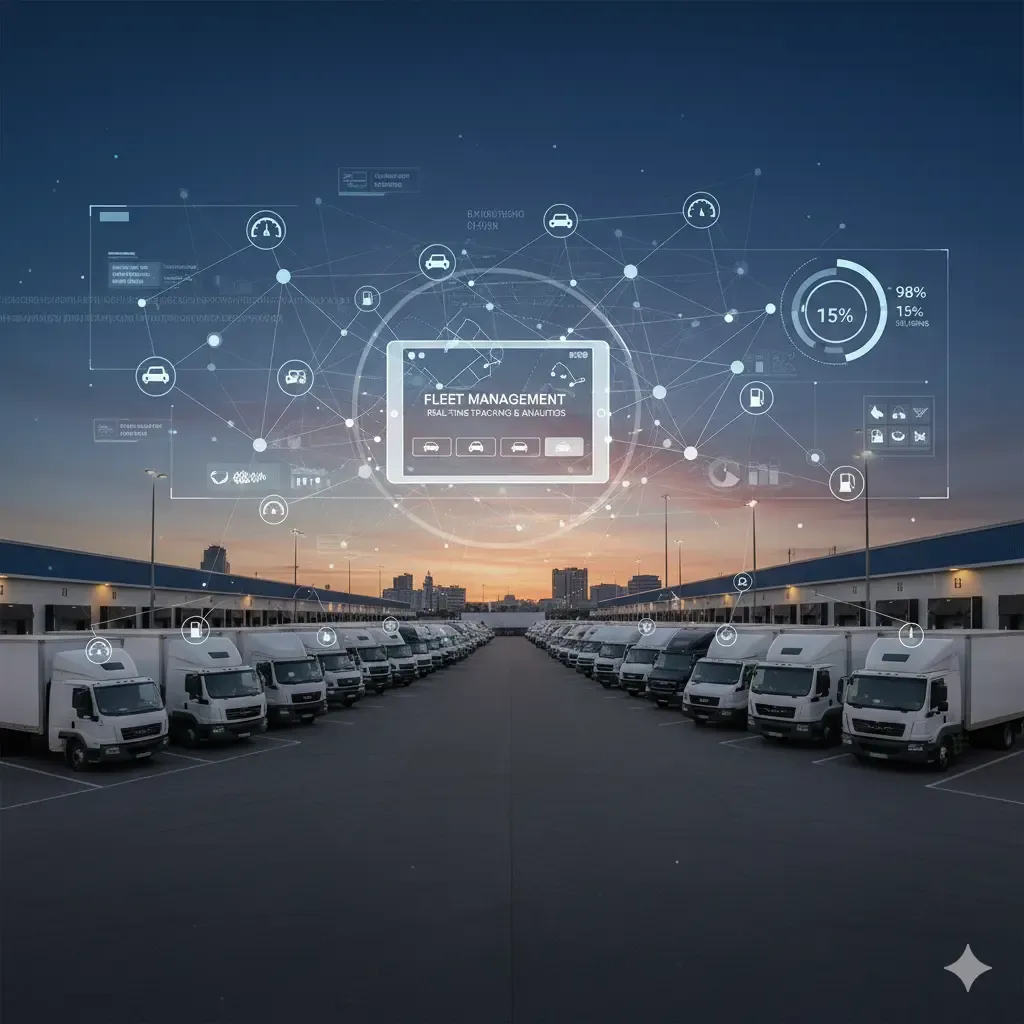
Saudi Arabia's logistics sector is moving fast. IMARC Group reported that The Kingdom's fleet management market hit USD 281 million in 2025 alone! Vision 2030 is pouring billions into smart mobility infrastructure. making fleet visibility a business necessity, not a luxury upgrade.
This guide will show you exactly what a fleet tracking system is, how it works, who needs it, and how to choose the right one for your operations.
What Is a Fleet Tracking System?
A fleet tracking system sits at the heart of fleet management. It monitors the real-time and historical location, behavior, and performance of vehicles across a fleet. But here's the key point most people miss: it's not just a GPS dot on a map.
A true vehicle tracking system is actually three things working together: a tracking device inside the vehicle, data connection, and a software dashboard where you see everything.
The result? It transforms raw data into decisions.
Fleet Tracking vs. GPS Tracking
You may use these terms the same way, but they're totally different
GPS tracking is monitoring location. A basic GPS tracker tells you where a vehicle is, but it won't tell you why your fuel bill is 30% over budget.
Fleet tracking, on the other hand, is a complete management system. It layers vehicle location on top of other fleet’s reports.
Here's a quick breakdown:
Feature | GPS Tracking | Fleet Tracking System |
| Real-time location | ✅ | ✅ |
| Engine diagnostics (OBD-II) | ❌ | ✅ |
| Driver behavior scoring | ❌ | ✅ |
| Route optimization | ❌ | ✅ |
| Historical reporting & analytics | Limited | ✅ |
| Geofencing & alerts | Sometimes | ✅ |
Bottom line: GPS tracking is a feature. Fleet tracking is a system.
What Is the Purpose of a Vehicle Tracking System?
At its core, the purpose is control and visibility. Dispatch doesn't know if Driver Ahmad took a 40-minute detour. Maintenance doesn't know that Truck #7 has been showing engine temperature warnings for three days. A vehicle tracking system solves all of that. It delivers:
- Operational visibility
- Cost control
- Driver accountability
- Compliance documentation
- Customer service improvement
How GPS Fleet Tracking Works
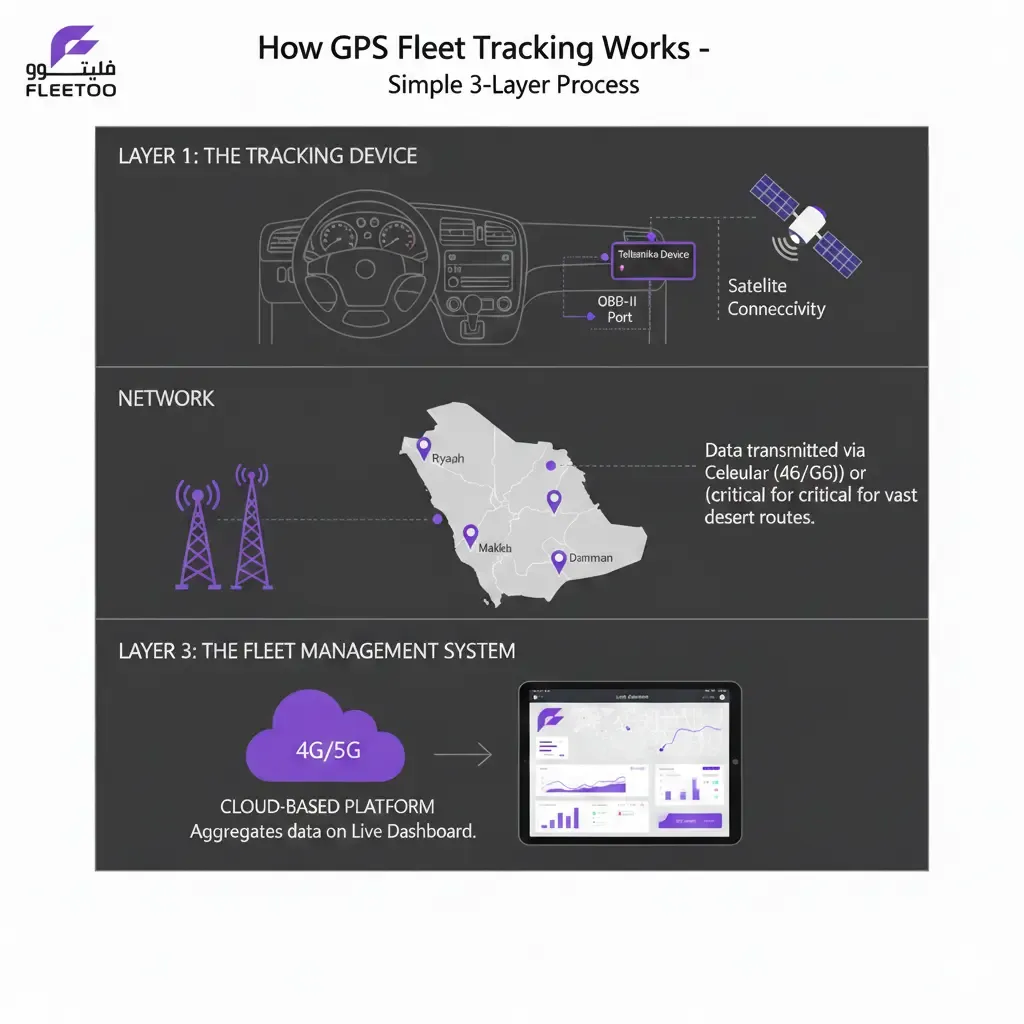
Every GPS fleet tracking system follows this same basic structure:
- Layer 1: The Tracking Device connected to the vehicle's OBD-II port or hardwired into the electrical system. High-end telematics devices also connect directly to the CAN bus — the vehicle's internal communication network — such as Teltonika devices.
- Layer 2: The Network where the tracking device transmits data via cellular networks (4G/5G), satellite (for areas with no cell coverage), or a combination of both. In Saudi Arabia's vast desert routes between Riyadh, Makkah, and the Eastern Province, cellular coverage could be weak, so satellite connectivity is critical.
- Layer 3: The fleet management system where everything comes together. A cloud-based platform aggregates all incoming data from all vehicles and presents it on a live dashboard.
Real-Time vs. Historical Data of fleet tracking
These two data serve completely different operational purposes, and you need both!
Real-time data is for operational decisions made at the moment.
For example, you receive an alert that a driver just crossed 140 km/h on the Jeddah–Makkah highway and makes a call. Real-time data is your live nervous system.
Historical data is for strategic decisions. For example at the end of the month, you notice that three trucks in your Dammam branch average 35 minutes of daily idling.
What Are the Three Types of Fleet Tracking?
Not all fleet tracking systems work the same way. The right type depends on your budget, operational needs, and connectivity environment.
Active Tracking (Real-Time)
Active tracking transmits vehicle location and data at regular intervals, typically every 10 to 60 seconds. Your dashboard updates constantly.
Best for: Delivery fleets, service companies, any operation where real-time decision-making matters.
Requires: Constant cellular or satellite connectivity.
Passive Tracking (Data Logging)
Passive systems store data onboard the device and only transfer it when the vehicle reconnects to the network. Then you can review the trip data after the fact.
Best for situations where real-time connectivity isn't available.
Limitation: No live alerts, no ability to react while the vehicle is in the field.
Hybrid Tracking
Hybrid systems store data locally when connectivity is lost and automatically sync it to the dashboard when the signal returns. For Saudi operations that cross remote desert regions, this is often the most practical choice.
Best for: Fleets operating across rural areas
Quick Comparison Table: Active vs. Passive vs. Hybrid:
Feature | Active (Real-Time) | Passive (Data Logging) | Hybrid |
Live location updates | ✅ | ❌ | ✅ (when connected) |
Works without cell coverage | ❌ | ✅ | ✅ |
Real-time driver alerts | ✅ | ❌ | Partial |
Historical reporting | ✅ | ✅ | ✅ |
Cost | Higher | Lower | Mid-range |
Best use case | Urban/delivery fleets | Campus/closed fleets | Remote/long-haul fleets |
Who Actually Needs a Vehicle Tracking System?
Here's the honest answer: almost any business that operates vehicles. But the need becomes urgent, and the ROI becomes obvious in specific situations.
By Fleet Size
There's a common hesitation among smaller Saudi businesses: "We only have 8 trucks. Is this really for us?"
Globally, businesses that implement GPS fleet tracking save an average of $3,000 to $6,000 per vehicle per year through reduced fuel costs, lower insurance premiums, and more efficient dispatching. For a 5-vehicle operation, that's up to $30,000 in annual savings
The minimum threshold for strong ROI: 5 or more vehicles used for business purposes more than 5 days a week.
By Industry
Saudi Arabia's economy creates high demand across several specific industries:
Logistics & Freight Companies, where e-commerce sector saw 10% year-on-year growth in Q4 2024,
Oil & Gas Transport sector, In Saudi Arabia, these companies send their vehicles across far and empty areas where it’s hard to stay connected.
Construction, where it requires tight control over heavy equipment and transport vehicles spread across massive job sites.
Government: public infrastructure fleets use tracking systems for compliance, accountability, and citizen service reporting.
Signs You need a fleet tracking system
If three or more of the following apply to your operation, you need a fleet tracking system now:
- You've had unexplained fuel costs
- Drivers reported accidents that you couldn't verify
- You've discovered unauthorized vehicle use after the fact
- Maintenance was missed because of the relying on someone's memory
- Your compliance documentations are scattered
If two signs or more apply, you're losing money every day you don't implement tracking.
advantages of gps vehicle tracking system
1. Fuel Cost Reduction
Fuel is one of the biggest costs a fleet can control in Saudi Arabia, especially since vehicles drive long distances in very hot weather, which increases consumption.
Globally, tracking systems reduce fuel costs by 15–25% through:
Idle time monitoring (every hour of idling burns 0.5–1.0 liters of fuel, adding up fast across a fleet)
Route optimization (shorter, smarter routes = less fuel)
Speed management
Unauthorized trip elimination
Assume a Saudi fleet of 20 trucks spending SAR 80,000/month on fuel, that means they could save SAR 12,000–20,000 per month from fuel reduction alone.
2. Maintenance Cost Reduction
Proactive maintenance scheduling prevents the expensive emergency breakdowns that blindside manual operations. According to fleet management benchmarks, tracking systems cut maintenance costs by 15–20%.
3. Driver Productivity Gains
Before tracking, each vehicle wastes about 30–60 minutes a day on delays and slow routes. Saving even 15 minutes per vehicle each day can add real money to the business every month.
4. Overall ROI
Industry data shows that fleet GPS tracking delivers 300–500% ROI within 12–18 months of implementation. For Saudi companies dealing with high fuel costs, long distances, and growing compliance requirements, the return is often faster.
How much does Fleet tracking system cost?
Pricing varies, but most providers use the same pricing structure.
What Affects Cost?
- Hardware: The tracking device costs between 300 - 600 SAR/ unit. A basic OBD-II plug-in tracker is at the low end. A hardwired device with CAN bus integration such as Teltonika FMC150 sits at the high end.
- Software Subscription: Monthly fees depending on provider with flexible plans for standard and enterprise platforms. The more AI-powered features, and custom integrations the higher a price.
- Installation: Professional installation of hardwired trackers.
- Hidden costs to plan for: Data migration, system integration with existing ERP or dispatch software.
What to Look for When Choosing a Fleet Tracking System
The Saudi market now has dozens of options, from global platforms like Samsara locally-built solutions like Fleetoo Saudi fleet management system.
Before choosing any platform, make sure it has these basic features:
- Real-time GPS tracking with 10–30 second update intervals
- Live dashboard accessible via browser and mobile app
- Driver behavior monitoring
- Fuel consumption reporting with idle time breakdown
- Geofencing with automated alerts for zone entries and exits
- Historical trip reports exportable to Excel or PDF
- Arabic language support for Saudi-based teams
- 24/7 customer support
Fleet Tracking Device Considerations
The car trackers matter as much as the software. Ask vendors these specific questions:
- Connectivity: Does it support 4G LTE Saudi networks (STC, Mobily, Zain)
- Installation: Is it hardwired or OBD-II plug-in
- Environmental rating: Does the device carry an IP67 or higher rating for heat and dust resistance?
- Battery backup: Does it continue transmitting if power is cut? This matters for theft detection.
- Tamper alerts: Does it notify you if someone tries to remove the device?
Integration with Existing Software
Before buying, verify integration of the fleet tracking system with your ERP system, fuel card provider, and maintenance management software. Fleetoo integrates with all of these in one fleet management software.
The advantages of a GPS vehicle tracking system multiply dramatically when the data flows freely between systems rather than sitting in an isolated dashboard.
Start with your biggest pain point. If fuel costs are killing your margins, tracking solves that within weeks. If driver accountability is the issue, behavior scoring and geofencing address it immediately.
FAQ
What is the difference between a fleet tracking system and a fleet management system?
Fleet tracking is a component of fleet management. Tracking focuses on real-time vehicle location and data collection. Fleet management is the broader system that includes other fleet monitoring aspects.
How many vehicles do I need before fleet tracking is worth it?
As few as 5 vehicles. At that scale, recovering just one tank of fuel per vehicle each month typically exceeds the monthly cost of tracking.
Can fleet tracking help with Saudi traffic violations?
Yes. Speed monitoring and behavior alerts help drivers stay within legal speed limits.
Can I track trucks and heavy equipment with the same system?
Yes. Most enterprise fleet tracking platforms such as Fleetoo support mixed fleets — cars, vans, trucks, heavy equipment, and even non-powered assets
Ahmed Adlan
CEO of Fleetoo
Chief Executive Officer of Fleetoo, a technology leader with deep expertise spanning software engineering and logistics. Previously served as Chief Technology Officer at ACTS, where he led a team of developers and successfully built an AI-powered chatbot leveraging vector databases. He delivered a distinctive application interface design capable of handling over 15,000 requests per second. Drawing on strong capabilities in system architecture, artificial intelligence, and cloud engineering, he leads Fleetoo with a clear vision: transforming fleet management into a strategic, data-driven asset powered by IoT and automation, with a strong focus on measurable impact and continuous innovation.