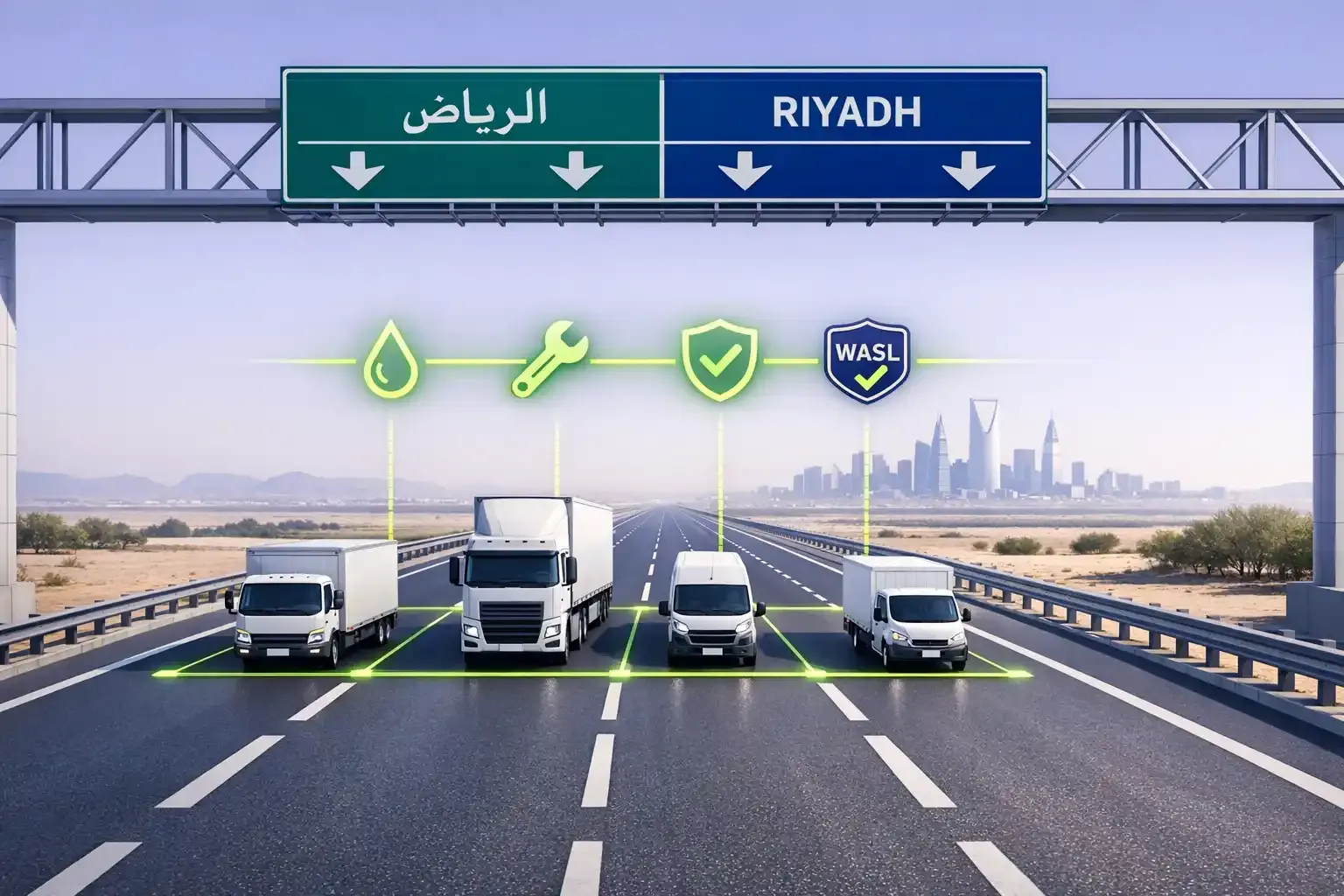
7 SMART Fleet Management Goals and Objectives
These SMART goals can transform fleet operations by focusing on measurable improvements.
Fleet Management

Most fleet managers set goals .. Few achieve them, Do you know why?
Generic Vehicle fleet management goals and objectives create the illusion of progress while your actual metrics stay the same. What optimizes fleet operations is connecting each strategic objective to specific SMART goals and measurable KPIs that your team can actually act on.
In this guide we will show you that connection. For each critical fleet management goals and objectives you'll see exactly how to put them into action.
Fleet management Goals vs. Objectives vs. KPIs
Usually fleet managers mix up these terms which creates confusion about what they are actually trying to accomplish. Here's what each one means:
- Goals are the broad outcomes you're working toward over 12-24 months
- Objectives of fleet management on the other hand, break down the "how" and "when" of reaching those goals
- KPI in fleet management (Key Performance Indicators) are the numbers that show whether you're on track
Element | Definition | Example | Time Horizon |
| Goal | Strategic direction | Optimize total cost of ownership | 12-24 months |
| Objective | Measurable outcome | Reduce maintenance costs by 15% | 3-12 months |
| KPI | Quantifiable indicator | Cost per kilometer driven | Always tracked |
| SMART Target | Specific implementation | Decrease cost/km from SAR 2.40 to SAR 2.04 by December 2025 | Defined timeframe |
Below are the most important fleet management goals pairing each with measurable objectives, KPIs, and SMART examples that work.
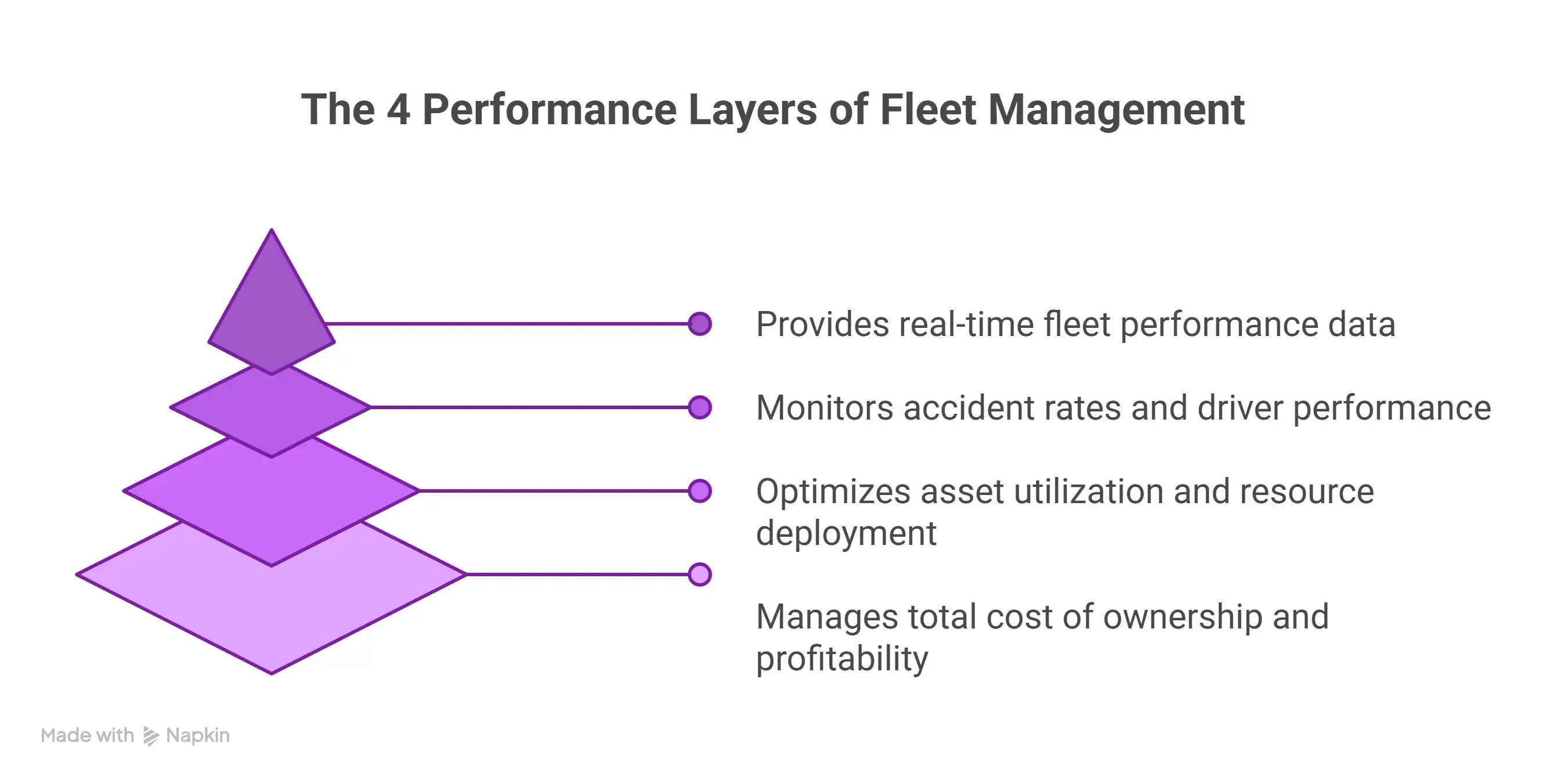
The 4 Performance Layers of Fleet Management
Before diving into fleet management goals and objectives, you need to understand that every fleet management objective connects to one of four key performance layers that shape your operational success.
Financial Performance
This layer focuses on managing your total cost of ownership and overall profitability. In Saudi Arabia's high intensity sectors like construction and delivery, vehicle operating costs can consume 30-40% of total operational budgets, according to data from regional logistics operators.
Operational Efficiency
Efficiency measures how well you're using your assets. It answers questions like: Are vehicles sitting idle when they should be generating revenue? The benefits of fleet management system technology become most apparent here. Real-time visibility transforms how you deploy resources.
Safety & Compliance
This layer protects both your people and your business.it involves monitoring accident rates and driver performance. Since TGA enforces strict periodic vehicle inspection requirements, Missing these deadlines may ground vehicles until compliance is restored.
Visibility & Data Intelligence
Without accurate, real-time data about your fleet's performance, you're making decisions based on guesswork and outdated reports. Here is where SaaS vehicle fleet management system like Fleetoo deliver strategic advantage.
Now let's translate these layers into specific, actionable SMART goals for fleet managers.
7 SMART Fleet Management Goals and Objectives
1. Optimize Total Cost of Ownership (TCO)
- The Objective: Reduce total fleet operating costs while ensuring vehicles remain reliable
- Key KPIs to Track: Cost per kilometer driven, repeat repair rate, Idling rate
- SMART goal Example: reduce fleet cost per kilometer by 12% within 12 months. Achieve this by integrating automated fuel card systems, increasing preventive maintenance to 65% of work orders, and reducing vehicle idling to 4% through better driver monitoring.
- Business Impact: meeting these targets doesn’t just cut costs - it also improves fleet lifecycle management.
check: preventive maintenance checklist for vehicles
2. Improve Fuel Efficiency
- The Objective: Increase average fleet fuel efficiency through driver behavior modification and vehicle optimization.
- Key KPIs to Track: Fuel cost per kilometer, Idle time percentage, Harsh acceleration events per 100 km, Fuel card transaction anomalies
- SMART goal Example: Reduce fleet average fuel consumption from 11.2 L/100km to 9.5 L/100km by June 30, 2026, by implementing weekly driver scorecards that rank fuel efficiency performance.
- Business Impact: reducing fuel consumption has a direct financial impact by lowering the Total Cost of Ownership (TCO).
3. Maximize Vehicle Utilization
- The Objective: increase active work time by identifying underutilized vehicles for reassignment and phasing out non-performing ones. Understanding how to manage a fleet of trucks efficiently requires knowing exactly how each vehicle is being used.
- Key KPIs to Track: utilization rate, revenue per vehicle, average trip distance
- SMART goal Example: Increase fleet utilization from 62% to 78% by September, by implementing dynamic dispatching software that reduces average vehicle idle time from 6.2 hours to 3.8 hours per day.
- Business Impact: Higher utilization means you accomplish more with fewer vehicles. If you can increase utilization by 16 percentage points, you might handle the same workload with 15% fewer vehicles
4. Reduce Vehicle Downtime Through Predictive Maintenance
- The Objective: to move from reactive, last-minute repairs to a structured, scheduled maintenance system. Unplanned breakdowns are expensive. The direct repair costs hurt, but the larger damage comes from disrupted schedules, missed deliveries, and emergency rental vehicles at premium rates.
- Key KPIs to Track: Scheduled vs. Unscheduled Maintenance Ratio, Maintenance Completion Time, Repeat Repair Percentage
- SMART goal Example: reduce unscheduled maintenance events by 15% within 12 months.
5. Improve Driver Safety Performance
The Objective: Reduce avoidable accidents by 50% and improve overall driver safety scores by 30% within nine months through behavior monitoring and targeted training.
- Key KPIs to Track: Driver Behavior, Compliance
- SMART goal Example: Reduce fleet accident rate by 15% over the next 12 months by implementing weekly driver safety scorecards with recognition for top performers
- Business Impact: Fewer accidents translate to lower insurance premiums, decreased repair expenses, and less unscheduled downtime
6. Ensure Regulatory Compliance
- The Objective: Achieve and maintain 100% compliance with TGA inspection requirements and driver licensing regulations throughout the year
- Key KPIs to Track: Vehicles inspection, Active drivers with valid licenses, License expiration dates
- SMART goal Example: Maintain 100% vehicle inspection compliance and 100% driver license validity throughout 2026 by implementing 60-day advance inspection scheduling and conducting monthly driver license verification audits
- Business Impact: By meeting regulatory standards, you protect your business from fines, prevent vehicle downtime, and maintain a strong position during audits.
7. Increase Operational Visibility with Real-Time Fleet Data
- The Objective: Implement comprehensive real-time tracking and reporting capabilities that provide location, status, and performance data for 100% of fleet vehicles within 90 days.
This is where Fleetoo delivers what you need, the system captures every fuel transaction instantly, flags anomalies, and updates your cost tracking automatically.
- Key KPIs to Track: Real-time vehicle location, data integration, Report generation time, user adoption rate
- SMART Example: Achieve 100% real-time GPS tracking coverage across all 55 fleet vehicles within the next quarter with automated data integration and conduct training for all 12 fleet staff members with 90% platform adoption.
- Business Impact: Faster problem detection that prevents small issues from becoming expensive problems.
For fleet managers in Saudi Arabia, setting measurable Fleet Management Goals and Objectives is especially critical. With the fleet management market expected to grow from USD 0.30 billion in 2025 to USD 0.49 billion by 2030 at a 10.2% CAGR, there’s increasing pressure to optimize operations while aligning with Vision 2030 goals
Fleetoo makes this easier by consolidating fleet data into a single, real-time platform available in both Arabic and English.
Book a demo now and simplify your fleet management
Fleetoo
Fleetoo Team
Fleetoo empowers fleet operators in Saudi Arabia to streamline operational management with AI-generated detailed reports on vehicle performance, going beyond GPS tracking and driver monitoring.